|
Contact Us Table of Contents Search Site Google listing of all pages on this website Site Map Toby Johnson's Facebook page Toby Johnson's YouTube channel Toby Johnson on Wikipedia Toby Johnson Amazon Author Page  Secure site at https://tobyjohnson.com  Also on this website: As an Amazon Associate
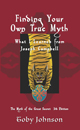
I earn from qualifying purchases. Toby Johnson's books: Toby's books are available as ebooks from smashwords.com, the Apple iBookstore, etc. FINDING
YOUR OWN TRUE MYTH: What I Learned
from Joseph Campbell: The
Myth
of the
Great Secret
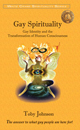
III GAY SPIRITUALITY: The Role of Gay Identity in the Transformation of Human Consciousness
GAY PERSPECTIVE: Things Our Homosexuality Tells Us about the Nature of God and the Universe
SECRET MATTER, a sci-fi novel with wonderful "aliens" with an Afterword by Mark Jordan
GETTING
LIFE IN PERSPECTIVE:
A
Fantastical Gay Romance set in two different time periods
THE FOURTH QUILL, a novel about attitudinal healing and the problem of evil  TWO SPIRITS: A Story of Life with the Navajo, a collaboration with Walter L. Williams  CHARMED LIVES: Spinning Straw into Gold: GaySpirit in Storytelling, a collaboration with Steve Berman and some 30 other writers
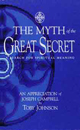
THE MYTH OF THE GREAT SECRET: An Appreciation of Joseph Campbell
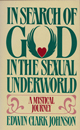
IN SEARCH OF GOD IN THE SEXUAL UNDERWORLD: A Mystical Journey
Books on Gay Spirituality: White Crane Gay Spirituality Series
Articles and Excerpts:
Review of Samuel Avery's The Dimensional Structure of Consciousness Funny Coincidence: "Aliens Settle in San Francisco" About Liberty Books, the Lesbian/Gay Bookstore for Austin, 1986-1996 The Simple Answer to the Gay Marriage Debate A Bifurcation of Gay Spirituality Why gay people should NOT Marry The Scriptural Basis for Same Sex Marriage
Gay ConsciousnessQ&A about Jungian ideas in gay consciousness What Jesus said about Gay Rights Common Experiences Unique to Gay Men Is there a "uniquely gay perspective"? Interview on the Nature of Homosexuality What the Bible Says about Homosexuality Mesosexual Ideal for Straight Men Waves of Gay Liberation Activity Wouldn’t You Like to Be Uranian? The Reincarnation of Edward Carpenter Why Gay Spirituality: Spirituality as Artistic Medium Easton Mountain Retreat Center Andrew Harvey & Spiritual Activism The Mysticism of Andrew Harvey
Enlightenment
Joseph Campbell's description of Avalokiteshvara You're Not A WaveJoseph Campbell Talks about Aging What is Enlightenment? What is reincarnation? How many lifetimes in an ego? Emptiness & Religious Ideas Experiencing experiencing experiencing Going into the Light Meditations for a Funeral Meditation Practice The way to get to heaven Buddha's father was right What Anatman means Advice to Travelers to India & Nepal The Danda Nata & goddess Kalika Nate Berkus is a bodhisattva John Boswell was Immanuel Kant Cutting edge realization The Myth of the Wanderer Change: Source of Suffering & of Bliss World Navel What the Vows Really Mean Manifesting from the Subtle Realms The Three-layer Cake & the Multiverse The est Training and Personal Intention Effective Dreaming in Ursula LeGuin's The Lathe of Heaven Gay
Spirituality
|
from The Myth of the Great Secret: An Appreciation of Joseph Campbell (Celestial Arts, 1990) This article has 4 parts. This is the first part
Joseph Campbell's approach to myth was exemplified in his style of weaving together stories, images, and metaphors from different traditions. That the myths can be intermixed in order to clarify their deeper meaning, as Campbell did in The Hero With a Thousand Faces in order to extract what he called the mono-myth of the hero's journey, presumes that the various traditions arise from a common source "which [has] remained as constant throughout the course of human history as the form and nervous structure of the human physique itself." (Hero, p. 257) This is a presumption that the individual religions--especially those in the West--would disagree with, each claiming hegemony over the others, each maintaining that it alone has truth. That kind of exclusivism has resulted in the history of wars, persecutions, and autos-da-fé ("acts of faith" as religious executions were ironically called)--from pre-Biblical times to the present day, from Ireland to Iraq--that make many modern individuals understandably cynical about religion. It just doesn't make sense. Joe's facility and willingness to intermix the tales simply dismisses the objectionable exclusivism and, in passing, demonstrates a whole different epistemology of religious truth. It certainly spoke to me and transformed my understanding, simultaneously saving my religious impulses while satisfying my modern sensibilities. In my account of my work with Harvard sociologist-researcher Toby Marotta, In Search of God in the Sexual Underworld, I presented such a weaving together of myth themes to demonstrate the major point of that book: that the social problems of the sexual underworld-- prostitution, pornography, drugs, violence, even molestation-- derive more from the condemnations of sexuality in our culture than from the inherent disorderedness of bodily urges. The discovery of our research, in mystical terms, was that how we look at the world determines what we see and that spiritual vision is supposed to transform the world in order to save it, not to condemn it. There's a Buddhist aphorism to that effect: Fools live in a foolish world; bodhisattvas live in a bodhisattva world, buddhas live in a buddha world. It's no wonder then that men like Jerry Falwell or the Reverend Wildmon, founder of the American Family Association, see sin and debauchery all around them, even in a holy--if, admittedly, erotically charged--parable about Jesus like Nikos Kazantzaki's Last Temptation of Christ; or that some of their ilk, like Jimmy Swaggart, end up falling into the muck they generate all around them. Using some notions straight out of Campbell and some out of my own insights, I want to demonstrate how we can find the wisdom of saving the world and the flesh in surprising places. After all, in a buddha world, even the grass is enlightened and every story is a lesson in enlightenment. In Joel Chandler Harris's story of Brer Rabbit and the Tar-baby, for instance, we find a classic description of the hero's confrontation with the world and a hint at the wisdom by which the hero saves himself and the world.
Brer Fox, he lay low. This story of Brer Rabbit parallels an Indian folk story of the Buddha. Long before he was incarnated as the wise teacher who would enter nirvana in his lifetime, his spirit lived as an heroic, young adventurer called Prince Five-weapons. On the journey back to his father's kingdom, following completion of his martial training, he came to a dark and forbidding forest in which lived a fierce ogre called Sticky Hair. He was warned to go another way, but he was confident and fearless and set forth straight into the ogre's domain. Brer Rabbit's confrontation with the Tar-baby was a little less intentional, but soon no less militant. For when the Tar-baby did not respond to his salutation, even after hollerin', in case the Tar-baby was deaf, Brer Rabbit took it upon himself to teach the Tar-baby a lesson in civility. So he threatened to whack her upside the head if she didn't take off her hat and say howdy. Brer Fox, he lay low, and the Tar-baby just stayed still, saying nothing. Brer Rabbit drew back his fist and took her a whack on the side of the head. His fist went right into the tar and stuck there. After threatening to hit her again if she didn't let him loose, Brer Rabbit fetched her a whack with his other hand. And that stuck too. Brer Rabbit kicked the Tar-baby with first one foot, then the other, and finally, in desperation, butted her with his head 'til he was stuck firm to the Tar-baby in five places. Just then Brer Fox sauntered forth from his hiding place and, just as innocent as a mockingbird, greeted Brer Rabbit. This time it was Brer Rabbit that ain't sayin' nothing. Well, Brer Fox was pretty pleased with himself. He'd caught Brer Rabbit fair and square. Ain't nobody made Brer Rabbit try to strike up an acquaintance with the Tar-baby. And nobody invited him to stick his hands, his feet, or his head in the tar. He did that all on his own. And now he'd be stuck 'til Brer Fox went and lit a brush fire, pulled him out of the tar, and barbecued him for lunch. Brer Rabbit saw he'd been caught dead to rights and he talked mighty humble. "I don't care what you do with me, Brer Fox, so long as you don't fling me in that there briar patch." Seeing as how it was going to be a lot of work to make a fire and apparently not caring whether lunch was cooked or raw, Brer Fox reckoned he could just hang the rabbit. "Hang me just as high as you please, Brer Fox, but for the Lawd's sake, don't fling me in that briar patch," said Brer Rabbit. Seeing as how he had no rope, Brer Fox decided to drown the rabbit. "Drown me just as deep as you please, Brer Fox, but don't fling me in that briar patch," said Brer Rabbit. Seeing as how there was no water around, the Fox said he'd just skin the rabbit. "Skin me, Brer Fox, snatch out my eyeballs, pull out my hair, tear out my ears by the roots and cut off my legs," said Brer Rabbit, "but please, please, Brer Fox, don't fling me in the briar patch." Well, Brer Fox was pretty fed up with Brer Rabbit's whining. He really didn't care about eating him so much as he did hurting him as bad as he could. So he caught him up by the hind legs, pulled him out of the Tar-baby, slung him around in the air, and flung him right into the middle of that there briar patch. There was a considerable flutter where the rabbit struck and Brer Fox hung around to see what was going to happen. By and by he heard someone calling to him, and way up the hill he saw Brer Rabbit sitting on a log combing the tar out of his fur. "Bred and born in the briar patch, Brer Fox, bred and born in the briar patch. Briars can't hurt me," sang Brer Rabbit as he skipped off just as lively as a cricket in the embers.
To become a hero, the Buddha had to overcome fear and trick death. When he was seated beneath the Bo Tree on the Immovable Spot, where he would soon attain his enlightenment, he was assailed by Kama-Mara, the Lord of Desire and Death. To put an end to the temptation he touched his hand to the earth, proclaiming his right to be there. And the earth mother-goddess roared in a voice of thunder that terrified Kama-Mara and all his minions, so that they fled, leaving the Buddha in peace. He had seen that so long as he stayed grounded, firm in his resolve, unfrightened by the illusions of fear and desire, he was unstuck. But the confrontation with Kama-Mara over the right to be on the Immovable Spot was not to come for several incarnations after Prince Five-weapons' battle with Sticky Hair. He had another adventure to deal with first. The Prince took his name from the five weapons he bore: poisoned arrows, sword, spear, and club, and his own body trained in martial arts. With these he expected to slay the ogre who, in turn, took his name, as one might imagine, from the thick hair all over his body into which stuck any weapon used against him.
Hesitating before eating him up, the ogre asked the youth, "Why are you not afraid?" "Why should I be afraid? Death is certain in every life," declared the Prince. "Besides I carry in my belly a thunderbolt for a weapon you cannot withstand. If you eat me up, the thunderbolt will blow you to pieces. And, in that case, we'll both perish." Sticky Hair, not quite as difficult to convince, but just as credulous as Brer Fox, submitted to the wisdom of the future Buddha, was converted, practiced self-denial, and became a divine spirit dwelling in the forest. Each of us is equipped with five weapons. For, as Campbell points out (following A. K. Coomaraswamy and others), the five weapons are the five external senses with which we contact the world. Sticky Hair and the Tar-baby represent that world. In his enlightenment the Buddha discovered that the world that threatens to eat us up, tear out our ears by the roots, and cut off our legs is but the physical manifestation of our thoughts and experiences, like a dream or mirage. But when we engage the world through our senses we become stuck in it. We take it seriously. We become imprisoned in our own creation, caught in the form we give to our experience of self, valuing one thing over another, succumbing to fear and desire, resisting life. We get stuck in the world because we fail to look beyond it, understand it in a greater context, or take responsibility for our participation in its creation. The hero is wiser than the world. Oh, Brer Rabbit had got himself stuck all right, but when he saw the nature of the Tarbaby and the grinning face of Brer Fox, he very quickly got wise. What he knew--that Brer Fox didn't--is that rabbits are different from foxes: that people live in different universes with different assumptions, expectations, aims, and values based on their upbringing and experience. Because the fox was so full of hate and lived in such a one-dimensional world, he assumed because he himself wouldn't want to fall into a briar patch Brer Rabbit was telling the truth when he pleaded with him not to throw him into them there briars. The fox fell for the ruse and the hero got away. Young Five-weapons revealed to Sticky Hair that besides the physical world in which swords cut and clubs crush and mangle, there is an etheric world in which Sticky Hair's defenses could not protect him. In Indian thought, there were not five senses but six, for mind was considered a sense. It was through the power of mind to observe the other senses, and to discover the wisdom that death need not be feared, that the Prince was armed with the lightning bolt in his belly. This bolt, by the way, is the power that transforms Billy Batson into Captain Marvel in the modern comic book myth. Invocation of the mantra "Shazam" (an acronym for the heroic qualities of Solomon's wisdom, Hercules' strength, Atlas' stamina, Zeus' power, Achilles' courage, and Mercury's speed) reminds the hero trapped in the illusion of human personality of who he really is and releases super powers. If even comic books and Saturday morning television reveal the essential wisdom, why do we fail to possess the powers? The Buddha answered that, of course, we do possess them: Behold the universe we have created. But we are so mesmerized by that creation that we do not remember our ego-transcendent identity and we do not realize that we are creating it just the way we want to. Our modern vantage point allows us to observe ourselves (though it is precisely this ability which is responsible for our loss of belief). We are conscious of the operation of our minds. Just as our minds are responsible for the advances we have achieved, so are they for the problems that have resulted. And yet only our ability to observe ourselves can solve these problems which, like Tar-baby and Sticky Hair, seem to trap us more deeply the more we grapple with them. Only a change in consciousness, in how we perceive the world, can save us from being trapped in it. The wisdom of the mythological teachings is always, in part, concerned with how to get unstuck from the world, how to see with the spiritual eye beyond the senses to who we really are. This wisdom is what is conveyed in the stories of the heroes' journeys, for the heroes are always seeking their true identity. This article has 4 parts. This is the first part Part 4: A Course in Miracles About In Search of God in the Sexual Underworld |
Toby Johnson, PhD is author of nine books: three non-fiction books that apply the wisdom of his teacher and "wise old man," Joseph Campbell to modern-day social and religious problems, four gay genre novels that dramatize spiritual issues at the heart of gay identity, and two books on gay men's spiritualities and the mystical experience of homosexuality and editor of a collection of "myths" of gay men's consciousness.
Johnson's book
GAY
SPIRITUALITY: The Role of Gay Identity in the Transformation of
Human Consciousness won a Lambda Literary Award in 2000.
His GAY
PERSPECTIVE: Things Our [Homo]sexuality Tells Us about the Nature
of God and the Universe was nominated for a Lammy in 2003. They
remain
in
print.











 Two
Spirits is available as an
audiobook narrated by Arthur Raymond.
Two
Spirits is available as an
audiobook narrated by Arthur Raymond. 

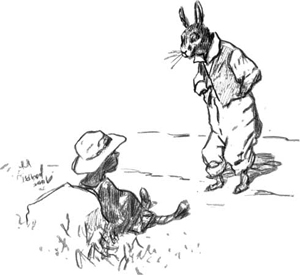 Brer
Fox
tried
time and
time again to catch Brer Rabbit, but time and time again Brer Rabbit
got away. Then one day, Brer Fox got him some tar, and made himself a
Tar-baby. Then he took this here Tar-baby and sat her in the road and
then he lay off in the bushes. By-and-by along came Brer
Rabbit--lippity, chippity, chippity, lippity--just as sassy as a
jaybird.
Brer
Fox
tried
time and
time again to catch Brer Rabbit, but time and time again Brer Rabbit
got away. Then one day, Brer Fox got him some tar, and made himself a
Tar-baby. Then he took this here Tar-baby and sat her in the road and
then he lay off in the bushes. By-and-by along came Brer
Rabbit--lippity, chippity, chippity, lippity--just as sassy as a
jaybird. 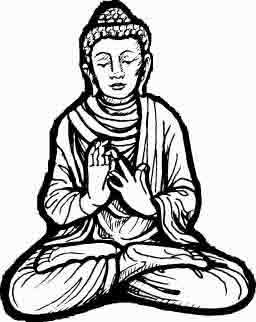
 Five-weapons, upon finding the ogre,
smote him
with his arrows. They stuck in the hair. Then he tried his fabulous
sword. It too stuck. One by one the weapons, including, of course,
the Prince's hands, feet, and head, got stuck fast in the ogre's
hair. But the Prince was undaunted.
Five-weapons, upon finding the ogre,
smote him
with his arrows. They stuck in the hair. Then he tried his fabulous
sword. It too stuck. One by one the weapons, including, of course,
the Prince's hands, feet, and head, got stuck fast in the ogre's
hair. But the Prince was undaunted.