|
Contact Us Table of Contents Search Site Google listing of all pages on this website Site Map Toby Johnson's Facebook page Toby Johnson's YouTube channel Toby Johnson on Wikipedia Toby Johnson Amazon Author Page  Secure site at https://tobyjohnson.com  Also on this website: As an Amazon Associate
I earn from qualifying purchases. Toby Johnson's books: Toby's books are available as ebooks from smashwords.com, the Apple iBookstore, etc. FINDING
YOUR OWN TRUE MYTH: What I Learned
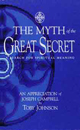
from Joseph Campbell: The
Myth
of the
Great Secret
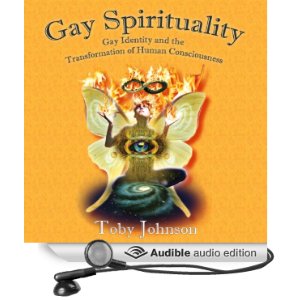
III GAY SPIRITUALITY: The Role of Gay Identity in the Transformation of Human Consciousness
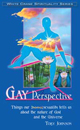
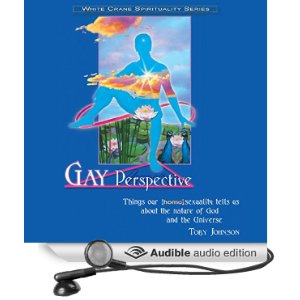
GAY PERSPECTIVE: Things Our Homosexuality Tells Us about the Nature of God and the Universe
SECRET MATTER, a sci-fi novel with wonderful "aliens" with an Afterword by Mark Jordan
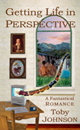
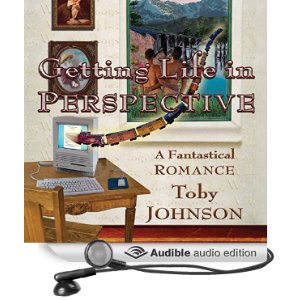
GETTING
LIFE IN PERSPECTIVE:
A
Fantastical Gay Romance set in two different time periods
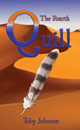
THE FOURTH QUILL, a novel about attitudinal healing and the problem of evil  TWO SPIRITS: A Story of Life with the Navajo, a collaboration with Walter L. Williams  CHARMED LIVES: Spinning Straw into Gold: GaySpirit in Storytelling, a collaboration with Steve Berman and some 30 other writers
THE MYTH OF THE GREAT SECRET: An Appreciation of Joseph Campbell
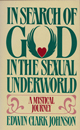
IN SEARCH OF GOD IN THE SEXUAL UNDERWORLD: A Mystical Journey
Books on Gay Spirituality: White Crane Gay Spirituality Series
Articles and Excerpts:
Review of Samuel Avery's The Dimensional Structure of Consciousness Funny Coincidence: "Aliens Settle in San Francisco" About Liberty Books, the Lesbian/Gay Bookstore for Austin, 1986-1996 The Simple Answer to the Gay Marriage Debate A Bifurcation of Gay Spirituality Why gay people should NOT Marry The Scriptural Basis for Same Sex Marriage
Gay ConsciousnessQ&A about Jungian ideas in gay consciousness What Jesus said about Gay Rights Common Experiences Unique to Gay Men Is there a "uniquely gay perspective"? Interview on the Nature of Homosexuality What the Bible Says about Homosexuality Mesosexual Ideal for Straight Men Waves of Gay Liberation Activity Wouldn’t You Like to Be Uranian? The Reincarnation of Edward Carpenter Why Gay Spirituality: Spirituality as Artistic Medium Easton Mountain Retreat Center Andrew Harvey & Spiritual Activism The Mysticism of Andrew Harvey
Enlightenment
Joseph Campbell's description of Avalokiteshvara You're Not A WaveJoseph Campbell Talks about Aging What is Enlightenment? What is reincarnation? How many lifetimes in an ego? Emptiness & Religious Ideas Experiencing experiencing experiencing Going into the Light Meditations for a Funeral Meditation Practice The way to get to heaven Buddha's father was right What Anatman means Advice to Travelers to India & Nepal The Danda Nata & goddess Kalika Nate Berkus is a bodhisattva John Boswell was Immanuel Kant Cutting edge realization The Myth of the Wanderer Change: Source of Suffering & of Bliss World Navel What the Vows Really Mean Manifesting from the Subtle Realms The Three-layer Cake & the Multiverse The est Training and Personal Intention Effective Dreaming in Ursula LeGuin's The Lathe of Heaven Gay
Spirituality
|
 Janet Planet By Eleanor Lerman Mayapple Press, 200 pages, 978-1936419067 Available from mayapplepress.com Also available from amazon.com Janet Planet   Reviewed by Toby Johnson, author of The Myth of the Great Secret: An Appreciation of Joseph Campbell Janet Planet is a wonderfully engaging and beautifully written roman à clef-style novel. The story is told in two time periods: the present of the age of the internet, email and cell phones and the past of the age of psychedelic drugs, exotic gurus and hippie counterculture. The first is written in ongoing present tense—an interesting reading experience in itself; the latter, in italics, in a nostalgic, lyrical past tense. A major theme of the novel is that events of a person’s past are never entirely forgotten or left behind, for understanding the present brings the past back into awareness. That is how this story is told. In the present, Janet of the eponymous title is a late middle-aged woman, living in Woodstock NY, a former 60s hippie now residing in this town of counterculture legend, doing harpsichord repair and refurbishing. Soon a mysterious character from her 60s/70s past appears in Woodstock and Janet is forced to remember her earlier life with him, when he’d nicknamed her “Janet Planet,” in order to understand how to respond to him as who he is now and to who she believes he should have become based on who he was then. The he is Jorge Castelan, “Georgie” to his intimates, a UCLA grad student in anthropology who’d gone to Mexico to study indigenous uses of medicinal plants and discovered—or was discovered by—the Mexican Indian wiseman/sorceror Yamon who taught him the secrets of peyote mysticism and transworldly sorcery; these secrets and his adventures finding them he wrote about in a series of bestselling books. Jorge Castelan, of course, is Carlos Castenada and Yamon is Don Juan. Eleanor Lerman’s account of Janet Planet and Jorge Castelan pretty closely jibes with the wikipedia entry on Castenada, though there are clear differences. Castenada died of cancer in L.A. in 1998. The fictional character, Jorge Castelan, is told to have gone off for an exotic, high-end alternative cancer cure, so he is alive in the 2000s and, as “the last nagual,” is still raring to transcend space, time and eternity. Interestingly, death would not have been that transcendence; the nagual (which means “leader of a band of seers”) doesn’t expect to die to get to the other side; while he is still alive, he is going directly over. In reality, Carlos Castenada became a sort of cult figure in 1968 with the release of The Teachings of Don Juan. Three more books followed in quick succession, all claiming to be accounts of Castenada’s adventures in Mexico with a group Yaqui Indian sorcerers who possessed magical powers, like invisibility, bi-location and the ability to jump off cliffs unharmed—the jump was the big event that “proved” to Castenada and to his readers that Yaqui magic was real. Critics complained these books weren’t factually consistent and one researcher even found evidence that Castenada was in the UCLA library reading books about peyote on the very date he reported taking the psychedelic cactus with the Indians in the Sonoran desert. Even if the books were fictional, many enthusiastic readers agreed, they still conveyed valid mystical wisdom from a legitimate seeker and student of Native American shamanism. Castenada had always presented himself as mysterious and other worldly (and explained away temporal inconsistencies in his accounts as part of the inexplicable, mysterious quality of higher reality). In 1973, he withdrew from the public eye, moving into a large house with three women companions who under his and Don Juan’s tutelage became witches. In the 1990s he reappeared briefly to tout a series of yoga/Gurdjieff movements/tai chi-like exercises called tensegrity supposed based in Toltec spiritual practice. Following his death in 1998, the witches and a tensegrity teacher all disconnected their cell phones and disappeared, never to be seen again. No one knows what happened to them. Did they all to the other side to be with the nagual? A body found in Death Valley in 2003, not far from an abandoned car, was identified in 2006 as that of one of Castenada’s companions. Janet Planet adds another character to the story: Janet, who is not taken as another wife, but adopted as a daughter for the countercultural family of one man and three women. She’d become disillusioned and fled the family, and so was not involved in their subsequent disappearance. A little rearranged in time, the basic outline of Castenada’s life is cast as that of Georgie Castelan. In the novel, Castelan’s touting the exercise program does not happen till the present, and that’s the crisis of the story. The Georgie Janet had known as a true teacher, she believes, would never have participated in such a blatant scheme to cash in on the popularity of videotape exercise fads, if only because he wouldn’t have wanted himself recorded. (In actual fact, Carlos Castenada did not appear in the tensegrity tapes.) The novel’s climax comes when Janet takes it on herself to stop Georgie from ruining his reputation by putting out the tapes. Well, of course, one reason this book is intriguing is because it seems to be revealing material about a popular figure of the 1970s and a truly formative teacher of hippie and new age mysticism whose life was always shrouded in mystery. But the reason I want to recommend Janet Planet to readers is not just to get the dish about a celebrity from my youth, but because the novel so gracefully blends the modern American present with its demand for factuality and true history with that more mysterious and elusive side of life which psychedelics revealed to a segment of a certain generation in which strange and unexplainable things do happen. Lerman’s novel rekindles the magical quality of hippie thinking and hopeful ideology. I’m not sure she really gives the dish on Carlos Castenada anyway. What she has done is to have woven a story about a middle-aged woman recapturing the wonder and hopeful expectation of youth and giving herself a reason—and an omen—to start on a new adventure. This is the message of the two time frames of the story: to keep alive and happy and moving forward in life entails tying up unresolved fragments of the past and rediscovering what inspired you as a youth, so you can reclaim it as an adult with wisdom and perspective. Janet Planet is a lovely, haunting, wistful, poetic piece of writing and mythopoesis. It stirred up wonderful memories for me—and, as you see, sent me running to Wikipedia to get the facts behind this inspired and inspiring roman à clef. It’s a good story and an easy and satisfying read. |
Toby Johnson, PhD is author of nine books: three non-fiction books that apply the wisdom of his teacher and "wise old man," Joseph Campbell to modern-day social and religious problems, four gay genre novels that dramatize spiritual issues at the heart of gay identity, and two books on gay men's spiritualities and the mystical experience of homosexuality and editor of a collection of "myths" of gay men's consciousness.
Johnson's book
GAY
SPIRITUALITY: The Role of Gay Identity in the Transformation of
Human Consciousness won a Lambda Literary Award in 2000.
His GAY
PERSPECTIVE: Things Our [Homo]sexuality Tells Us about the Nature
of God and the Universe was nominated for a Lammy in 2003. They
remain
in
print.




 Two
Spirits is available as an
audiobook narrated by Arthur Raymond.
Two
Spirits is available as an
audiobook narrated by Arthur Raymond.