Contact Us
Table of Contents
Search Site
Google listing of all pages on this website
Site Map
Toby
Johnson's Facebook page
Toby
Johnson's YouTube channel
Toby Johnson on Wikipedia
Toby
Johnson Amazon Author Page

Secure site at
https://tobyjohnson.com
Also on this
website:
As an Amazon Associate
I earn from qualifying purchases.
Toby
Johnson's books:
Toby's books are available as ebooks from
smashwords.com, the Apple iBookstore, etc.
FINDING
YOUR OWN TRUE MYTH: What I Learned
from Joseph Campbell: The
Myth
of the
Great Secret
III
GAY
SPIRITUALITY:
The Role of Gay Identity in the Transformation of Human Consciousness
GAY PERSPECTIVE:
Things Our Homosexuality Tells Us about the Nature of God and the
Universe

SECRET MATTER, a sci-fi novel with
wonderful "aliens" with an
Afterword by Mark Jordan
GETTING
LIFE IN PERSPECTIVE:
A
Fantastical Gay Romance set in two different time periods

THE FOURTH QUILL, a
novel about attitudinal healing and the problem of evil
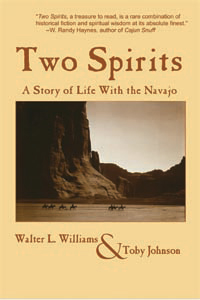
TWO SPIRITS: A Story of Life with
the
Navajo, a collaboration with Walter L. Williams

CHARMED
LIVES: Spinning Straw into
Gold: GaySpirit in Storytelling, a collaboration with
Steve Berman and some 30 other writers
THE MYTH OF THE GREAT
SECRET:
An
Appreciation of Joseph Campbell
IN SEARCH OF GOD IN THE
SEXUAL UNDERWORLD: A Mystical Journey
Unpublished manuscripts
About ordering
Books on
Gay Spirituality:
White
Crane Gay Spirituality Series

Articles
and Excerpts:
Review of Samuel
Avery's The
Dimensional Structure of Consciousness
Funny
Coincidence: "Aliens Settle in San Francisco"
About Liberty Books, the
Lesbian/Gay Bookstore for Austin, 1986-1996
The Simple Answer to the Gay Marriage Debate
A
Bifurcation of Gay Spirituality
Why gay people should NOT Marry
The Scriptural Basis for
Same Sex Marriage
Toby and Kip Get Married
Wedding Cake Liberation
Gay Marriage in Texas
What's ironic
Shame on the American People
The "highest form of love"
Gay Consciousness
Why homosexuality is a sin
The cause of homosexuality
The
origins of homophobia
Q&A
about Jungian ideas in gay consciousness
What
is homosexuality?
What
is Gay Spirituality?
My three
messages
What
Jesus said about Gay
Rights
Queering
religion
Common
Experiences Unique to Gay
Men
Is there a "uniquely gay
perspective"?
The
purpose of homosexuality
Interview on the Nature of
Homosexuality
What the Bible Says about
Homosexuality
Mesosexual
Ideal for Straight Men
Varieties
of Gay Spirituality
Waves
of Gay Liberation Activity
The Gay Succession
Wouldn’t You Like to Be Uranian?
The Reincarnation of
Edward Carpenter
Why Gay Spirituality: Spirituality
as Artistic Medium
Easton Mountain Retreat Center
Andrew Harvey &
Spiritual Activism
The Mysticism of
Andrew Harvey
The
upsidedown book on MSNBC
Enlightenment
"It's
Always About You"
The myth of the Bodhisattva
Avalokitesvara
Joseph
Campbell's description of
Avalokiteshvara
You're
Not A Wave
Joseph Campbell Talks
about Aging
What is Enlightenment?
What is reincarnation?
How many lifetimes in an
ego?
Emptiness & Religious Ideas
Experiencing experiencing experiencing
Going into the Light
Meditations for a Funeral
Meditation Practice
The way to get to heaven
Buddha's father was right
What Anatman means
Advice to Travelers to India
& Nepal
The Danda Nata
& goddess Kalika
Nate Berkus is a bodhisattva
John Boswell was Immanuel Kant
Cutting
edge realization
The Myth of the
Wanderer
Change: Source of
Suffering & of Bliss
World Navel
What the Vows Really
Mean
Manifesting
from the Subtle Realms
The Three-layer
Cake
& the Multiverse
The
est Training and Personal Intention
Effective
Dreaming in Ursula LeGuin's The Lathe of Heaven
Gay
Spirituality
Curious
Bodies
What
Toby Johnson Believes
The
Joseph Campbell Connection
The
Mann Ranch (& Rich Gabrielson)
Campbell
& The Pre/Trans Fallacy
The
Two Loves
The
Nature of Religion
What's true about
Religion
Being
Gay is a Blessing
Drawing Long Straws
Freedom
of Religion
The
Gay Agenda
Gay
Saintliness
Gay
Spiritual Functions
The subtle workings of the spirit
in gay men's lives.
The Sinfulness of
Homosexuality
Proposal
for a study of gay nondualism
Priestly Sexuality
Having a Church to
Leave
Harold Cole on Beauty
Marian Doctrines:
Immaculate Conception & Assumption
Not lashed to the
prayer-post
Monastic or Chaste
Homosexuality
Is It Time to Grow
Up? Confronting
the Aging Process
Notes on Licking
(July, 1984)
Redeem Orlando
Gay Consciousness changing
the
world by Shokti LoveStar
Alexander Renault
interviews Toby
Johnson
Mystical Vision
"The
Evolution of Gay Identity"
"St. John of the
Cross & the Dark Night of
the Soul."
Avalokiteshvara
at the Baths
Eckhart's Eye
Let Me
Tell You a Secret
Religious
Articulations of the
Secret
The
Collective Unconscious
Driving as
Spiritual Practice
Meditation
Historicity
as Myth
Pilgrimage
No
Stealing
Next
Step in Evolution
The
New Myth
The Moulting of the Holy Ghost
Gaia
is a Bodhisattva
The Hero's
Journey
The
Hero's Journey as archetype -- GSV 2016
The Gay Hero Journey
(shortened)
You're
On Your Own
Superheroes
Seeing
Differently
Teenage
Prostitution and the Nature of Evil
Allah
Hu: "God is present here"
Adam
and Steve
The Life is
in the Blood
Gay retirement and the "freelance
monastery"
Seeing with
Different Eyes
Facing
the Edge: AIDS as an occasion for spiritual wisdom
What
are you looking for in a gay science fiction novel?
The Vision
The
mystical experience at the Servites' Castle in Riverside
A Most Remarkable
Synchronicity in
Riverside
The
Great Dance according to C.S.Lewis
The Techniques Of The
World Saviors
Part 1: Brer Rabbit and the
Tar-Baby
Part 2: The
Bodhisattva Avalokiteshvara
Part 3: Jesus
and the Resurrection
Part 4: A
Course in Miracles
The
Secret of the Clear Light
Understanding
the Clear Light
Mobius
Strip
Finding
Your
Tiger Face
How Gay Souls Get Reincarnated
Joseph
Campbell, the Hero's Journey, and the modern Gay Hero-- a five part
presentation on YouTube
About Alien Abduction
In
honor of Sir Arthur C Clarke
Karellen was a homosexual
The
D.A.F.O.D.I.L. Alliance
Intersections
with the movie When We Rise
More
about Gay Mental Health
Psych
Tech Training
Toby
at the California Institute
The
Rainbow Flag
Ideas for gay
mythic stories
People
Kip and Toby,
Activists
Toby's
friend and nicknamesake Toby Marotta.
Harry
Hay, Founder of the gay movement
About Hay and The New Myth
About
Karl
Heinrich Ulrichs, the first
man to really "come out"
About Michael Talbot, gay mystic
About Fr. Bernard Lynch
About Richard Baltzell
About Guy Mannheimer
About David Weyrauch
About
Dennis Paddie
About Ask the Fire
About
Arthur Evans
About
Christopher Larkin
About Mark Thompson
About Sterling Houston
About Michael Stevens
The Alamo Business
Council
Our friend Tom Nash
Second March on
Washington
The
Gay
Spirituality Summit in May 2004 and the "Statement
of Spirituality"
Book
Reviews
Be Done on Earth by Howard
E. Cook
Pay Me What I'm Worth by
Souldancer
The Way Out by Christopher
L Nutter
The Gay Disciple by John Henson
Art That Dares by Kittredge Cherry
Coming Out, Coming Home by Kennth
A. Burr
Extinguishing
the Light by B. Alan Bourgeois
Over Coffee: A conversation
For Gay
Partnership & Conservative Faith by D.a. Thompson
Dark Knowledge
by
Kenneth Low
Janet Planet by
Eleanor
Lerman
The
Kairos by Paul E. Hartman
Wrestling
with Jesus by D.K.Maylor
Kali Rising by Rudolph
Ballentine
The
Missing Myth by Gilles Herrada
The
Secret of the Second Coming by Howard E. Cook
The Scar Letters: A
Novel
by Richard Alther
The
Future is Queer by Labonte & Schimel
Missing Mary
by Charlene Spretnak
Gay
Spirituality 101 by Joe Perez
Cut Hand: A
Nineteeth Century Love Story on the American Frontier by Mark Wildyr
Radiomen
by Eleanor Lerman
Nights
at
Rizzoli by Felice Picano
The Key
to Unlocking the Closet Door by Chelsea Griffo
The Door
of the Heart by Diana Finfrock Farrar
Occam’s
Razor by David Duncan
Grace
and
Demion by Mel White
Gay Men and The New Way Forward by Raymond L.
Rigoglioso
The
Dimensional Stucture of Consciousness by Samuel Avery
The
Manly Pursuit of Desire and Love by Perry Brass
Love
Together: Longtime Male Couples on Healthy Intimacy and Communication
by Tim Clausen
War
Between Materialism and Spiritual by Jean-Michel Bitar
The
Serpent's Gift: Gnostic Reflections on the Study of Religion by
Jeffrey J. Kripal
Esalen:
America and the Religion of No Religion by Jeffrey J. Kripal
The
Invitation to Love by
Darren Pierre
Brain,
Consciousness, and God: A Lonerganian Integration by Daniel A
Helminiak
A
Walk with Four Spiritual Guides by Andrew Harvey
Can Christians Be Saved? by Stephenson & Rhodes
The
Lost Secrets of the Ancient Mystery Schools by Stephenson &
Rhodes
Keys to
Spiritual
Being: Energy Meditation and Synchronization Exercises by Adrian
Ravarour
In
Walt We
Trust by John Marsh
Solomon's
Tantric Song by Rollan McCleary
A Special Illumination by Rollan McCleary
Aelred's
Sin
by Lawrence Scott
Fruit
Basket
by Payam Ghassemlou
Internal
Landscapes by John Ollom
Princes
& Pumpkins by David Hatfield Sparks
Yes by Brad
Boney
Blood of the Goddess by William Schindler
Roads of Excess,
Palaces of
Wisdom by Jeffrey Kripal
Evolving
Dharma by Jay Michaelson
Jesus
in Salome's Lot by Brett W. Gillette
The Man Who Loved Birds by Fenton Johnson
The
Vatican Murders by Lucien Gregoire
"Sex Camp"
by
Brian McNaught
Out
& About with Brewer & Berg
Episode One: Searching for a New Mythology
The
Soul Beneath the Skin by David Nimmons
Out
on
Holy Ground by Donald Boisvert
The
Revotutionary Psychology of Gay-Centeredness by Mitch Walker
Out There
by Perry Brass
The Crucifixion of Hyacinth by Geoff Puterbaugh
The
Silence of Sodom by Mark D Jordan
It's
Never About What It's About by Krandall Kraus and Paul Borja
ReCreations,
edited by Catherine Lake
Gospel: A
Novel
by WIlton Barnhard
Keeping
Faith: A Skeptic’s Journey by Fenton Johnson
Dating the Greek Gods by Brad Gooch
Telling
Truths in Church by Mark D. Jordan
The
Substance of God by Perry Brass
The
Tomcat Chronicles by Jack Nichols
10
Smart
Things Gay Men Can Do to Improve Their Lives by Joe Kort
Jesus and the Shamanic Tradition of Same Sex Love
by Will Roscoe
The
Third Appearance by Walter Starcke
The Last Hours of Ancient Sunlight by Thom Hartmann
Surviving
and Thriving After a Life-Threatening Diagnosis by Bev Hall
Men,
Homosexuality, and the Gods by Ronald Long
An Interview
with Ron Long
Queering Creole Spiritual Traditons by Randy
Conner & David Sparks
An Interview with
Randy Conner
Pain,
Sex
and Time by Gerald Heard
Sex
and the Sacred by Daniel Helminiak
Blessing Same-Sex Unions by Mark Jordan
Rising Up
by
Joe Perez
Soulfully
Gay
by Joe Perez
That
Undeniable Longing by Mark Tedesco
Vintage: A
Ghost
Story by
Steve Berman
Wisdom
for the Soul by Larry Chang
MM4M a DVD
by Bruce Grether
Double
Cross
by David Ranan
The
Transcended Christian by Daniel Helminiak
Jesus
in Love by Kittredge Cherry
In
the Eye of the Storm by Gene Robinson
The
Starry Dynamo by Sven Davisson
Life
in
Paradox by Fr Paul Murray
Spirituality for Our Global Community by Daniel
Helminiak
Gay & Healthy in a Sick Society by Robert A.
Minor
Coming Out: Irish Gay Experiences by Glen O'Brien
Queering
Christ
by Robert Goss
Skipping
Towards Gomorrah by Dan Savage
The
Flesh of the Word by Richard A Rosato
Catland by
David Garrett Izzo
Tantra
for Gay Men by Bruce Anderson
Yoga
&
the Path of the Urban Mystic by Darren Main
Simple
Grace
by Malcolm Boyd
Seventy
Times Seven by Salvatore Sapienza
What
Does "Queer" Mean Anyway? by Chris Bartlett
Critique of Patriarchal Reasoning by Arthur Evans
Gift
of
the Soul by Dale Colclasure & David Jensen
Legend of the Raibow Warriors by Steven McFadden
The
Liar's
Prayer by Gregory Flood
Lovely
are the Messengers by Daniel Plasman
The Human Core of Spirituality by Daniel Helminiak
3001:
The Final Odyssey by Arthur C. Clarke
Religion and the Human Sciences by Daniel Helminiak
Only
the
Good Parts by Daniel Curzon
Four
Short
Reviews of Books with a Message
Life
Interrupted by Michael Parise
Confessions of a Murdered Pope by Lucien Gregoire
The
Stargazer's Embassy by Eleanor Lerman
Conscious
Living, Conscious Aging by Ron Pevny
Footprints Through the Desert by Joshua Kauffman
True
Religion by J.L. Weinberg
The Mediterranean Universe by John Newmeyer
Everything
is God by Jay Michaelson
Reflection
by Dennis Merritt
Everywhere
Home by Fenton Johnson
Hard Lesson by James
Gaston
God
vs Gay?
by Jay Michaelson
The
Gate
of Tears: Sadness and the Spiritual Path by Jay Michaelson
Roxie
&
Fred by Richard Alther
Not
the Son He Expected by Tim Clausen
The
9 Realities of Stardust by Bruce P. Grether
The
Afterlife Revolution by Anne & Whitley Strieber
AIDS
Shaman:
Queer Spirit Awakening by Shokti Lovestar
Facing the Truth of Your Life by Merle Yost
The
Super Natural by Whitley Strieber & Jeffrey J Kripal
Secret
Body by
Jeffrey J Kripal
In
Hitler's
House by Jonathan Lane
Walking on Glory by Edward Swift
The
Paradox
of Porn by Don Shewey
Is Heaven for Real? by Lucien Gregoire
Enigma by Lloyd Meeker
Scissors,
Paper, Rock by Fenton Johnson
Toby
Johnson's
Books on Gay Men's Spiritualities:
Gay Perspective
Things Our [Homo]sexuality
Tells Us
about the
Nature of God and
the Universe
Gay
Perspective is available as an audiobook narrated
by Matthew Whitfield. Click
here
Gay Spirituality
Gay Identity and
the Transformation of
Human Consciousness
Gay
Spirituality is now
available as an audiobook, beautifully narrated by John Sipple. Click here
Charmed
Lives: Gay Spirit in Storytelling
edited by
Toby Johnson
& Steve Berman
Secret
Matter
Lammy Award Winner for Gay
Science Fiction
updated
Getting Life in
Perspective
A Fantastical Romance
Getting
Life in Perspective is available as an
audiobook narrated by Alex Beckham. Click
here
The Fourth Quill
originally published
as
PLAGUE
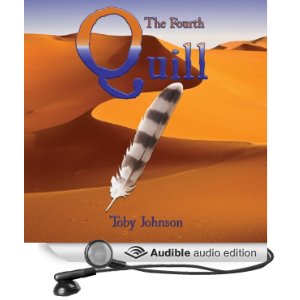
The Fourth Quill is
available
as an audiobook, narrated by Jimmie
Moreland. Click here
Two Spirits: A Story of
Life
with the Navajo
with Walter L. Williams
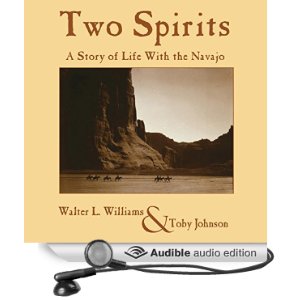 Two
Spirits is available as an
audiobook narrated by Arthur Raymond. Click
here Two
Spirits is available as an
audiobook narrated by Arthur Raymond. Click
here
Finding
Your Own True Myth: What I Learned from Joseph
Campbell
The
Myth
of the
Great Secret III
In Search of God in the Sexual Underworld
The Myth of the Great
Secret: An Appreciation of Joseph Campbell.
This
was the second edition of this book.
Toby Johnson's
titles are
available in other ebook formats from Smashwords.
|
Perelandra
C.S. Lewis was an
influential
voice
in modern Christianity. He was a classical Oxford don who wrote
pedantic studies of medieval literature. He also wrote the Narnia
children's stories--for which, curiously, he may be best known. ("The
Lion, the Witch, and the Wardrobe" has been made into a FX movie
blockbuster for Christmas 2005.) Lewis
wrote several fantasy, "mystical sci-fi," novels.
Perelandra is a parable about the nature
of
"original sin"
and mystical consciousness; it tells of a British college professor who
is whisked off by angelic-like beings to act as "God"'s spokesman when
the Adam and Eve of Venus, "Perelandra" in their language, are being
tempted by the devil--who appears in the form of an Earth scientist and
technocrat. It is a beautiful tale of the conquest of goodness. Most
interestingly, Lewis devises a mythic cosmology of light beings and
guardians spirits; Earth's mythologies, he proposes, are erroneous
attempts to grasp this cosmology.
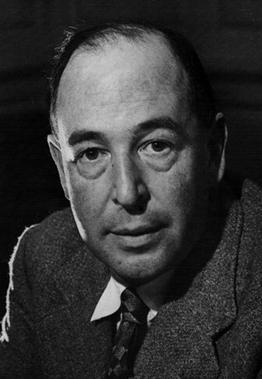 As we know from the play and movie, Shadowlands, C.S.
Lewis was
a "bachelor," living with his alcoholic brother most of his life,
living as a
sort of celibate cleric of academe. He certainly wasn't a modern gay
man, but he was one of us, I think. As we know from the play and movie, Shadowlands, C.S.
Lewis was
a "bachelor," living with his alcoholic brother most of his life,
living as a
sort of celibate cleric of academe. He certainly wasn't a modern gay
man, but he was one of us, I think.
A deeply religious man in later life, he
interpreted
the
Christianity of the Great Britain of the mid-20th century in which he
lived into what he thought would be a living religion.
He had some
dismissive things to say about homosexual bonding in his book THE FOUR
LOVES:
"... all those hairy old toughs of
centurions
in Tacitus, clinging to one another and begging for last kisses when
the legion was broken up...all pansies? If you can believe it you can
believe anything.”
That's hardly a valid argument against homosexual
activity in
the ancient world. Indeed, those comments only go to show how
stereotyped was Lewis's understanding of homosexuality throughout
history and,
even more importantly, how closeted--perhaps even from himself--he
really was. At any rate, he lived long before gay liberation and before
homosexuality was understood in a modern, enlightened psychological
context.
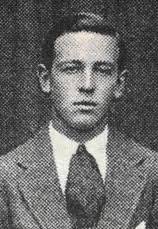 While I want to claim Jack Lewis, as he was called, as "one of us"
-- in the sense of being a visionary spurred on by aberrant sexuality
and freedom from conventional gender and familial roles -- I doubt he
was particularly sexually active in any meaningful way, either
homosexually or heterosexually. Though it is true that his longest
lifetime friend, Arthur Greeves, was homosexual. He
wasn't ignorant of sexual diversity; and he apparently wasn't
judgmental of homosexuality in his personal affairs. (Though a very
public "Christian," C.S. Lewis was NOT an example of the current day
"Family Values" Fundamentalist Christian.)
While I want to claim Jack Lewis, as he was called, as "one of us"
-- in the sense of being a visionary spurred on by aberrant sexuality
and freedom from conventional gender and familial roles -- I doubt he
was particularly sexually active in any meaningful way, either
homosexually or heterosexually. Though it is true that his longest
lifetime friend, Arthur Greeves, was homosexual. He
wasn't ignorant of sexual diversity; and he apparently wasn't
judgmental of homosexuality in his personal affairs. (Though a very
public "Christian," C.S. Lewis was NOT an example of the current day
"Family Values" Fundamentalist Christian.)
His marriage to Joy Davidman Gresham was mostly a scam of the British
immigration system and then later of that nation's socialized medicine.
After World War I, he'd come home at age 18 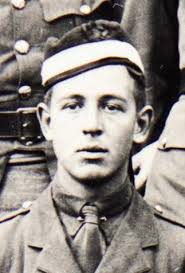 and moved the 45 year-old
Mrs. Maureen Moore and her 11 year-old daughter into his home, having
made a pact with his army buddy Paddy Moore that he'd care for his
friend's family in case Paddy died. Biographers assuming his
heterosexuality hypothesize he was in love with Mrs. Moore the 30 years
they lived together. The presumption of a repressed homosexuality might
better explain that he was bound to the Moore family by his
intense--and certainly never to be reciprocated--affection for his
friend Paddy. Who knows? Until the current transformation of
understanding about homosexuality, such details were routinely
concealed and misrepresented. and moved the 45 year-old
Mrs. Maureen Moore and her 11 year-old daughter into his home, having
made a pact with his army buddy Paddy Moore that he'd care for his
friend's family in case Paddy died. Biographers assuming his
heterosexuality hypothesize he was in love with Mrs. Moore the 30 years
they lived together. The presumption of a repressed homosexuality might
better explain that he was bound to the Moore family by his
intense--and certainly never to be reciprocated--affection for his
friend Paddy. Who knows? Until the current transformation of
understanding about homosexuality, such details were routinely
concealed and misrepresented.
Jack Lewis was certainly a visionary.
In his mystical fiction, he spoke raptuously
about a
transcendent
vision of the whole cosmos as a living being textured of light and
energy, far beyond the naive personal God of popular Christianity. From
him comes the sentence: "We live in an environment of mind as well as
of space."

Here is a wonderful excerpt from Perelandra which
describes the mystical experience of seeing directly into "the Great
Dance" of the multi-dimensional spacetimeconsciousness contiuum that is
the true cosmos:
"In the plan of the Great Dance plans without
number interlock, and each movement becomes in its season the breaking
into flower of the whole design to which all else had been directed.
Thus each is equally at the centre and none are there by being equals,
but some by giving place and some by receiving it, the small things by
their smallness and the great by their greatness, and all the patterns
linked and looped together by the unions of a kneeling with a sceptred
love. Blessed be He!"
"All that is made seems planless to the darkened mind,
because there are more plans than it looked for. In these seas there
are islands where the hairs of the turf are so fine and so closely
woven together that unless a man looked long at them he would see
neither hairs nor weaving at all, but only the same and the flat. So
with the Great Dance. Set your eyes on one movement and it will lead
you through all patterns and it will seem to you the master movement.
But the seeming will be true. Let no mouth open to gainsay it. There
seems no plan because it is all plan: there seems no centre because it
is all centre. Blessed be He!"
"Yet this seeming also is the end and final cause for which
He spreads out Time so long and Heaven so deep; lest if we never met
the dark, and the road that leads nowhither, and the question to which
no answer is imaginable, we should have in our minds no likeness of the
Abyss of the Father, into which if a creature drop down his thoughts
for ever he shall hear no echo return to him. Blessed, blessed, blessed
be He!"
And now, by a transition which he did not notice, it seemed
that what had begun as speech was turned into sight, or into something
that can be remembered only as if it were seeing. He thought he saw the
Great Dance. It seemed to be woven out of the intertwining undulation
of many cords or bands of light, leaping over and under one another and
mutually embraced in arabesques and flower-like subtleties.
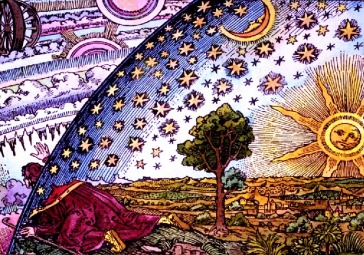 Each figure
as he looked at it became the master-figure or focus of the whole
spectacle, by means of which his eye disentangled a1l else and brought
it into unity--only to be itself entangled when he looked to what he
had taken for mere marginal decorations and found that there also the
same hegemony was claimed, and the claim made good, yet the former
pattern not thereby dispossessed but finding in its new subordination a
significance greater than that which it had abdicated. He could see
also (but the word "seeing" is now plainly inadequate) wherever the
ribbons or serpents of light intersected, minute corpuscles of
momentary brightness: and he knew somehow that these particles were the
secular generalities of which history tells--peoples, institutions,
climates of opinion, civilisations, arts, sciences, and the
like--ephemeral coruscations that piped their short song and vanished.
The ribbons or cords themselves, in which millions of corpuscles lived
and died, were things of some different kind. At first he could not say
what. But he knew in the end that most of them were individual
entities. If so, the time in which the Great Dance proceeds is very
unlike time as we know it.
Each figure
as he looked at it became the master-figure or focus of the whole
spectacle, by means of which his eye disentangled a1l else and brought
it into unity--only to be itself entangled when he looked to what he
had taken for mere marginal decorations and found that there also the
same hegemony was claimed, and the claim made good, yet the former
pattern not thereby dispossessed but finding in its new subordination a
significance greater than that which it had abdicated. He could see
also (but the word "seeing" is now plainly inadequate) wherever the
ribbons or serpents of light intersected, minute corpuscles of
momentary brightness: and he knew somehow that these particles were the
secular generalities of which history tells--peoples, institutions,
climates of opinion, civilisations, arts, sciences, and the
like--ephemeral coruscations that piped their short song and vanished.
The ribbons or cords themselves, in which millions of corpuscles lived
and died, were things of some different kind. At first he could not say
what. But he knew in the end that most of them were individual
entities. If so, the time in which the Great Dance proceeds is very
unlike time as we know it.
Some of the thinner and more delicate cords
were beings that we call short-lived: flowers and insects, a fruit or a
storm of rain, and once (he thought) a wave of the sea. Others were
such things as we also think lasting: crystals, rivers, mountains, or
even stars. Far above these in girth and luminosity and flashing with
colours from beyond our spectrum were the lines of the personal beings,
yet as different from one another in splendour as all of them from the
previous class. But not all the cords were individuals: some were
universal truths or universal qualities. It did not surprise him then
to find that these and the persons were both cords and both stood
together as against the mere atoms of generality which lived and died
in the clashing of their streams: but afterwards, when he came back to
earth, he wondered.
And by now the thing must have passed together out
of the region of sight as we understand it. For he says that the whole
solid figure of these enamoured and inter-inanimated circlings was
suddenly revealed as the mere superficies of a far vaster pattern in
four dimensions, and that figure as the boundary of yet others in other
worlds: till suddenly as the movement grew yet swifter, the
interweaving yet more ecstatic, the relevance of all to all yet more
intense, as dimension was added to dimension and that part of him which
could reason and remember was dropped farther and farther behind that
part of him which saw, even then, at the very zenith of complexity,
complexity was eaten up and faded, as a thin white cloud fades into the
hard blue burning of the sky, and a simplicity beyond all
comprehension, ancient and young as spring, illimitable, pellucid, drew
him with cords of infinite desire into its own stillness. He went up
into such a quietness, a privacy, and a freshness that at the very
moment when he stood farthest from our ordinary mode of being he had
the sense of stripping off encumbrances and awaking from trance, and
coming to himself. With a gesture of relaxation he looked about him. .
. . (C.S. Lewis, Perelandra, pp. 218-219. Ed. note: I've added
a few paragraph breaks for readbility.) region of sight as we understand it. For he says that the whole
solid figure of these enamoured and inter-inanimated circlings was
suddenly revealed as the mere superficies of a far vaster pattern in
four dimensions, and that figure as the boundary of yet others in other
worlds: till suddenly as the movement grew yet swifter, the
interweaving yet more ecstatic, the relevance of all to all yet more
intense, as dimension was added to dimension and that part of him which
could reason and remember was dropped farther and farther behind that
part of him which saw, even then, at the very zenith of complexity,
complexity was eaten up and faded, as a thin white cloud fades into the
hard blue burning of the sky, and a simplicity beyond all
comprehension, ancient and young as spring, illimitable, pellucid, drew
him with cords of infinite desire into its own stillness. He went up
into such a quietness, a privacy, and a freshness that at the very
moment when he stood farthest from our ordinary mode of being he had
the sense of stripping off encumbrances and awaking from trance, and
coming to himself. With a gesture of relaxation he looked about him. .
. . (C.S. Lewis, Perelandra, pp. 218-219. Ed. note: I've added
a few paragraph breaks for readbility.)
Ram Dass's story of the same vision, put very
simply: "You're Not a Wave!"
Joseph Campbell's cogent explanation of the nature of religion.
A nice article about C.S.
(Jack) Lewis's life by James Townsend
Here's the same idea from a very different voice:
Consciousness
expresses itself through creation. This world we live in
is the dance of the creator. Dancers come and go in the twinkling of an
eye but the dance lives on. On many an occasion, when I am dancing, I
have felt touched by something sacred. In those moments, I felt my
spirit soar and become one with everything that exists. I become the
stars and the moon. I become the lover and the beloved. I become the
victor and the vanquished. I become the master and the slave. I become
the singer and the song. I become the knower and the known. I keep on
dancing and then, it is the eternal dance of creation. The creator and
the creation merge into one wholeness of joy. I keep on dancing --
until there is only… the dance. --Michael Jackson
1992
 Perelandra
is set on Venus as it was imagined in the mid-1900s, an ocean world.
There is only one bit of solid land, an island with a mountain, which
is referred to as the Fixed Lands. Otherwise all the "terrain" of the
planet is floating islands, formed of mats of seaweed and plant life.
These islands provide a place to live; they are abundant with fruit. Perelandra
is set on Venus as it was imagined in the mid-1900s, an ocean world.
There is only one bit of solid land, an island with a mountain, which
is referred to as the Fixed Lands. Otherwise all the "terrain" of the
planet is floating islands, formed of mats of seaweed and plant life.
These islands provide a place to live; they are abundant with fruit.
(Illustration by Andromedaroach, Deviant Art;
there are other images of Perelandra on the site.)
The story is about the "Adam and Eve," the first parents of Venus/Perelandra being tested,
like Eve with the apple. In Lewis's novel, the character of God, named
Maleldil, has given one commandment -- not to sleep on the Fixed Lands.
The Eve character, called The Green Lady, is tempted by Satan, in the form of an
Earthling scientist, Edward Weston. He tries to convince the first parents on this new planet that they needn't obey Maleldil's
instruction.
The protagonist is a stand-in for C.S. Lewis himself (or for Lewis's
good friend and fellow "fantasy novelist" J.R.R. Tolkien), a British
college
professor of Classics named Elwin Ranson. In the previous novel in the series, Out of the Silent Planet,
Ransom was introduced to the real entitites in the Solar System which
are —poorly— mythologized on Earth as the various Gods and supernatural
beings. Ransom is friends with "angels," called eldila, who come to him with a mission. Since the Devil got to assume
a human body for his tempting, they ask Ransom to stand up against him. When he agrees, the eldila transport
Ransom to Perelandra to argue for the good.
And Ransom is successful and "original sin" is avoided on the new
planet. But it is by a much different contest than arguing points of
philosophy. He has to kill the opponent. More importantly in the plot,
Professor Ransom gets to see the
gods of this cosmology and to experience the Great Dance (as cited
above).
Towards the end of the story, "Eve" says:
“The reason for not yet living on the Fixed
Land is now so plain. How could I wish to live there except because it
was Fixed? And why should I desire the Fixed except to make sure — to
be able on one day to command where I should be the next and what
should happen to me? It was to reject the wave – to draw my hands out
of Maledil’s…to put in our own power what times should roll towards
us…as if you gathered fruits together to-day for to-morrow’s eating
instead of taking what came. That would have been cold love and feeble
trust. And out of it how could we ever have climbed back into love and
trust again?”
What a challenge to live with that love and trust.
Says Teilhard de Chardin: "We have only to believe. And the more
threatening and irreducible reality appears, the more firmly and
desperately must we believe. Then, little by little, we shall see the
universal horror unbend, and then smile upon us, and then take us in
its more than human arms (The Divine Milieu, p 137).
"Have faith," say God and the gods. This is what my imagined/mythologized Avalokiteshvara said to me at the 21st Street Baths.
Floating Islands
It turns out that "floating islands" are real. There are such floating
islands on Earth. And the message of not hanging on to the fixed and
certain is just as applicable on Earth as it was on Perelandra.
Here's a Wikipedia page: https://en.wikipedia.org/wiki/Floating_island
"Sometimes referred to as tussocks, floatons, or suds, natural floating
islands are composed of vegetation growing on a buoyant mat of plant
roots or other organic detritus. In aquatic regions of Northwestern
Europe several thousand acres of floating meadows (German Schwingrasen,
Dutch trilveen) have been preserved, which are partly used as
agricultural land, partly as nature reserves."
Not quite like the large sea-worthy, ocean-going islands in Lewis's novel, but real floating islands:
Doing the Impossible
Another section in Perelandra which has been particularly meaningful for me has to do with "doing the impossible."
Sometimes I have realized that for my own happiness and/or that of
another, I had to say something, I had to do something, I had to change
things--even though it seemed impossible. Not that anything I ever did
in my life was that "impossible," but that I have sometimes been afraid
of acting on something I wanted or needed to do.
Lewis's character Elwin Ransom—who has been offering philosophical
reasons to the Green Lady/Eve and to the demonic-possessed scientist
Weston/"The Unman"—realizes that he actually has to fight his opponent
in hand-to-hand combat, but he is a middle-aged college professor. How
can he even consider such a task?
He has a deep interior experience of speaking with "God"/ Maleldil/
"the voluble self" in which he realizes he has no choice because the
act is going to be done.
The thing still seemed impossible. But
gradually something happened to him which had happened to him only
twice before in his life. It had happened once while he was trying to
make up his mind to do a very dangerous job in the last war. It had
happened again while he was screwing his resolution to go and see a
certain man in London and make to him an excessively embarrassing
confession which justice demanded. In both cases the thing had seemed a
sheer impossibility: he had not thought but known that, being what he
was, he was psychologically incapable of doing it; and then, without
any apparent movement of the will, as objective and unemotional as the
reading on a dial, there had arisen before him, with perfect certitude,
the knowledge ‘about this time tomorrow you will have done the
impossible’.
The same thing happened now. His fear, his shame, his love, all his
arguments, were not altered in the least. The thing was neither more
nor less dreadful than it had been before. The only difference was that
he knew—almost as a historical proposition—that it was going to be
done. He might beg, weep, or rebel—might curse or adore—sing like a
martyr or blaspheme like a devil. It made not the slightest difference.
The thing was going to be done. There was going to arrive, in the
course of time, a moment at which he would have done it. The future act
stood there, fixed and unalterable as if he had already performed it.
It was a mere irrelevant detail that it happened to occupy the position
we call future instead of that which we call past.
The whole struggle was over, and yet there seemed to have been no
moment of victory. You might say, if you liked, that the power of
choice had been simply set aside and an inflexible destiny substituted
for it. On the other hand, you might say that he had been delivered
from the rhetoric of his passions and had emerged into unassailable
freedom. Ransom could not, for the life of him, see any difference
between these two statements. Predestination and freedom were
apparently identical. He could no longer see any meaning in the many
arguments he had heard on this subject.
No such thing as chance or fortune
Part of this inner dialogue includes the following
discussion of Ransom's name--in relation to the name of the World
Savior (which on Earth Christians know as Jesus Christ). There is deep
wisdom here about destiny/karma.
“It is not for nothing that you are named Ransom,” said the Voice.
And he knew that this was no fancy of his own. He knew it for a very
curious reason—because he had known for many years that his surname was
derived not from ransom but from Randolf’s son. It would never have
occurred to him thus to associate the two words. To connect the name
Ransom with the act of ransoming would have been for him a mere pun.
But even his voluble self did not now dare to suggest that the Voice
was making a play upon words. All in a moment of time he perceived that
what was, to human philologists, a mere accidental resemblance of two
sounds, was in truth no accident. The whole distinction between things
accidental and things designed, like the distinction between fact and
myth, was purely terrestrial.
The pattern is so large that within the little frame of earthly
experience there appear pieces of it between which we can see no
connection, and other pieces between which we can. Hence we rightly,
for our use, distinguish the accidental from the essential. But step
outside that frame and the distinction drops down into the void,
fluttering useless wings. He had been forced out of the frame, caught
up into the larger pattern. He knew now why the old philosophers had
said that there is no such thing as chance or fortune beyond the Moon.*
Before his Mother had borne him, before his ancestors had been called
Ransoms, before ransom had been the name for a payment that delivers,
before the world was made, all these things had so stood together in
eternity that the very significance of the pattern at this point lay in
their coming together in just this fashion. And he bowed his head and
groaned and repined against his fate—to be still a man and yet to be
forced up into the metaphysical world, to enact what philosophy only
thinks.
“My name also is Ransom,” said the Voice.
Readers of Toby Johnson's novel Secret Matter
might recognize this mention of the Moon as an outer limit: in order to
transport between the Visitors' dimension and our own, the Visitors'
spaceships had to go beyond the orbit of the Moon.
And readers of The Fourth Quill might recognize the Voice in Perelandra as the Voice John Stiers dialogues with in the "Closet of Horrors."
Perhaps for all of us, there's a Voice—of "God" or of the Self—that
keeps saying the same thing: "It is not for nothing that you are called
[to be a] Ransom."
We all are called to "save the world" because we are
all incarnations of that "God"/Self which creates the Universe in order
to know itself and saves the world by saying Yes.
This is the Self that in Mahayana Buddhism is mythologized to have
saved the world as Avalokiteshvara choosing to be all of everybody's
future incarnations.
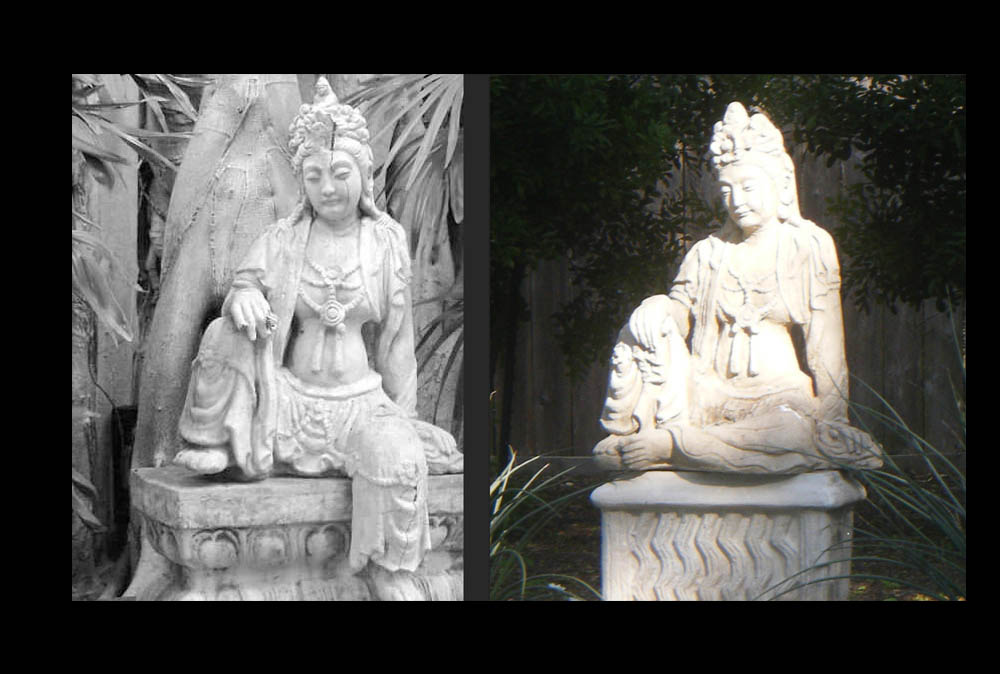
The image below shows Avalokiteshvara sitting in a relaxed meditation
pose with one leg cocked and the other down over a wall or tucked under
him. "Peace is at the heart of all," wrote Joseph Campbell, "because
Avalokiteshvara, Kuan Yin, mighty bodhisattva, Boundless Love includes,
regards and dwell within (without exception) every sentiant being."
(The quote continues on https://tobyjohnson.com/jesus.html#bodhisattva)
|