|
Contact Us Table of Contents Search Site Google listing of all pages on this website Site Map Toby Johnson's Facebook page Toby Johnson's YouTube channel Toby Johnson on Wikipedia Toby Johnson Amazon Author Page  Secure site at https://tobyjohnson.com  Also on this website: As an Amazon Associate
I earn from qualifying purchases. Toby Johnson's books: Toby's books are available as ebooks from smashwords.com, the Apple iBookstore, etc. FINDING
YOUR OWN TRUE MYTH: What I Learned
from Joseph Campbell: The
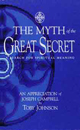
Myth
of the
Great Secret
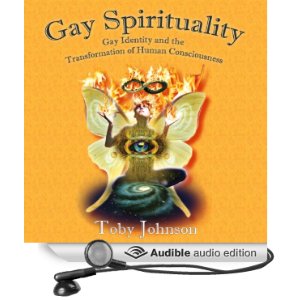
III GAY SPIRITUALITY: The Role of Gay Identity in the Transformation of Human Consciousness
GAY PERSPECTIVE: Things Our Homosexuality Tells Us about the Nature of God and the Universe
SECRET MATTER, a sci-fi novel with wonderful "aliens" with an Afterword by Mark Jordan
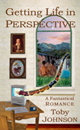
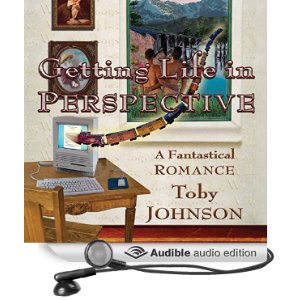
GETTING
LIFE IN PERSPECTIVE:
A
Fantastical Gay Romance set in two different time periods
THE FOURTH QUILL, a novel about attitudinal healing and the problem of evil  TWO SPIRITS: A Story of Life with the Navajo, a collaboration with Walter L. Williams  CHARMED LIVES: Spinning Straw into Gold: GaySpirit in Storytelling, a collaboration with Steve Berman and some 30 other writers
THE MYTH OF THE GREAT SECRET: An Appreciation of Joseph Campbell
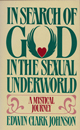
IN SEARCH OF GOD IN THE SEXUAL UNDERWORLD: A Mystical Journey
Books on Gay Spirituality: White Crane Gay Spirituality Series
Articles and Excerpts:
Review of Samuel Avery's The Dimensional Structure of Consciousness Funny Coincidence: "Aliens Settle in San Francisco" About Liberty Books, the Lesbian/Gay Bookstore for Austin, 1986-1996 The Simple Answer to the Gay Marriage Debate A Bifurcation of Gay Spirituality Why gay people should NOT Marry The Scriptural Basis for Same Sex Marriage
Gay ConsciousnessQ&A about Jungian ideas in gay consciousness What Jesus said about Gay Rights Common Experiences Unique to Gay Men Is there a "uniquely gay perspective"? Interview on the Nature of Homosexuality What the Bible Says about Homosexuality Mesosexual Ideal for Straight Men Waves of Gay Liberation Activity Wouldn’t You Like to Be Uranian? The Reincarnation of Edward Carpenter Why Gay Spirituality: Spirituality as Artistic Medium Easton Mountain Retreat Center Andrew Harvey & Spiritual Activism The Mysticism of Andrew Harvey
Enlightenment
Joseph Campbell's description of Avalokiteshvara You're Not A WaveJoseph Campbell Talks about Aging What is Enlightenment? What is reincarnation? How many lifetimes in an ego? Emptiness & Religious Ideas Experiencing experiencing experiencing Going into the Light Meditations for a Funeral Meditation Practice The way to get to heaven Buddha's father was right What Anatman means Advice to Travelers to India & Nepal The Danda Nata & goddess Kalika Nate Berkus is a bodhisattva John Boswell was Immanuel Kant Cutting edge realization The Myth of the Wanderer Change: Source of Suffering & of Bliss World Navel What the Vows Really Mean Manifesting from the Subtle Realms The Three-layer Cake & the Multiverse The est Training and Personal Intention Effective Dreaming in Ursula LeGuin's The Lathe of Heaven Gay
Spirituality
|
Discovery comes less often from learning and thinking than from intuition and insight. I was in graduate school in Theology on the way to the priesthood; I'd learned about the truths of Roman Catholic Christianity. I'd also studied C.G. Jung and Alan Watts and Joseph Campbell; I'd learned about the truths of the world's religions, especially Hinduism and Buddhism. I'd thought a lot about God. But once in the summer of 1968 when I was living in the Servite Priory in southern California, I experienced intuition. Though it lasted only a moment, it came to influence all my thinking since.
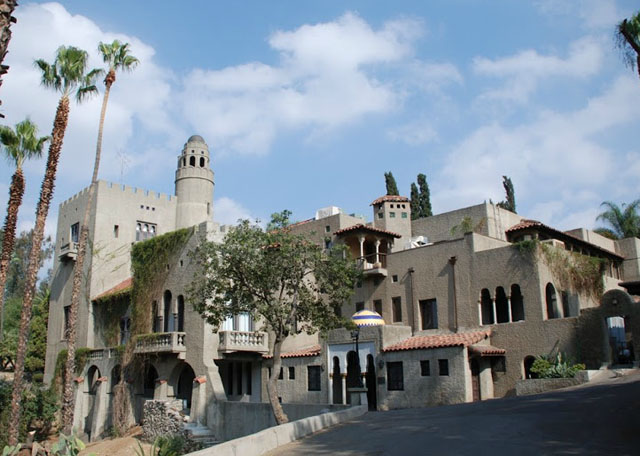
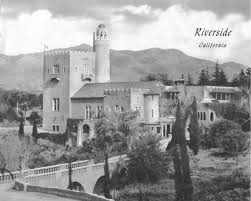
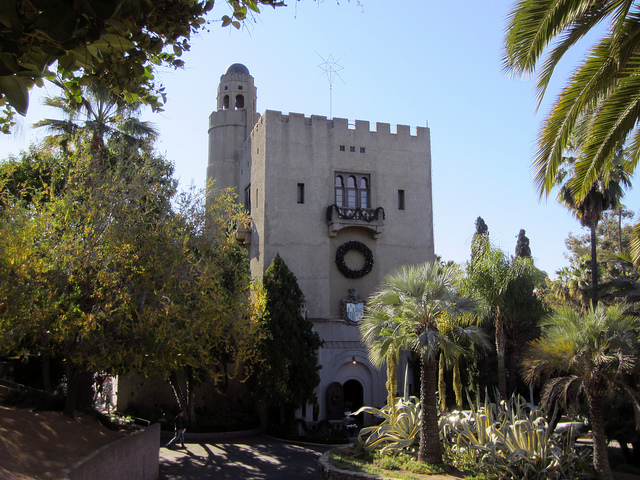
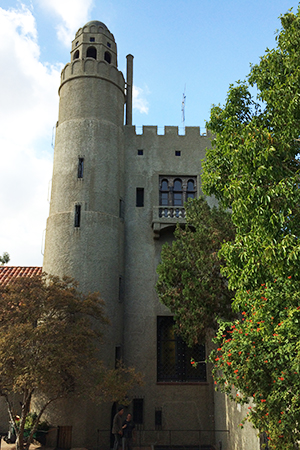
The monastery, house lore had it, was built during the 1920s by a rich eccentric who needed to disappear into the California desert where enemies would never find him. To gratify the whim of his wife, who had loved the Alhambra at Granada, he constructed a Moorish castle complete with moat, minaret, domes, and hanging gardens. After his death (of perfectly natural causes) the property, like so many other such odd estates, ended up in the hands of the Church, in this case, the Order of Servants of Mary. To counter the Islamic influence, the Servites had erected a huge fountain depicting Our Lady's bodily assumption into heaven right in the middle of the hanging gardens. And to house some fifty novices and students they'd added two dormitory wings on the crest of the hill above the castle. By
the time I arrived at the castle it had
been
a seminary for years, but it still retained some of the original
exotic flavor. There was an octagonal dining room with a domed ceiling
that allowed you to whisper to someone directly across the table from
you through echoes from the ceiling and be unheard by anyone else at
the table—or to listen in to someone else’s whispered conversation; and
below that was a secret room accessed through a built-in china cabinet
that swiveled open to reveal steps going down. The road into the property bridged an arroyo euphemistically referred to as "the moat," then dipped down to pass under an arcade which upheld a terrace overlooking the arroyo, and finally circled a rock-walled garden in front of the main entrance. From there a huge doorway led into a marbled antechamber, up a few steps, and into the great hall, which the Servites were now using as a chapel. Lining both sides of the huge room were glass doors painted with brilliant icons depicting the Catholic sacramental system; on the right these opened onto the terrace above the moat and on the left, onto a central tiled court, where palm trees and tall cypresses shaded the Shrine of the Assumption and what was left of the gardens of cypresses, succulents, and cactuses.
After Mass, I had gone back to prepare
lunch
for the community. Being pretty good at it and enjoying cooking, that
summer I'd taken on responsibility for the kitchen duties. The room
was a mess. The previous night the arrival of visitors from the
Midwest had inspired an impromptu party. Now dirty dishes from the
coffee-and-doughnut social following the morning Mass were piling up
atop the remains of that party. To add to the confusion, during the
evening one of the visitors had fallen against a lavatory in one of
the upstairs rooms, knocking it off the wall. The pipes burst and
rained water into the refectory adjoining the kitchen. As part of the
late-night repair, the water had been mopped up, but in the morning
the floor was still dirty and streaked.
The Prior of the house, a gentle, saintly, and somewhat reclusive man named Father Peregrine Graffius, assumed the job of waxing and buffing the refectory floor. (I think he wanted to avoid all the hoopla surrounding the arrival of the visitors.) I set out to straighten up the kitchen and wash the dishes. It seemed like an endless chore. More dishes were being brought in from the after-Mass social than I could keep up with. And nobody was volunteering to help. I grew first angry, then philosophical, then despondent. The previous school year I'd been quite taken by the moral philosophy of Immanuel Kant with its insistence that for human actions to have moral significance they had to be done out of duty and not desire. Even before discovering Kant, I'd read Joseph Campbell's account of the Buddhist saint Avalokiteshvara who overcame personal desire and saved the world by vowing to take upon himself the suffering of the world. Swept with zeal in the fervor of Campbell's words, I'd made the bodhisattva vow myself. And so that morning I'd kept reminding myself of my commitment to duty and to overcoming personal whim. Just as I finished in the kitchen, the Prior came in and asked me to help him replace the tables in the refectory, then to put away the buffing machine for him. That would be my last chore. The house was quiet now. All the guests had left. The brothers, for whom it turned out I'd unnecessarily fixed lunch, had gone off with the visitors from the Midwest. All morning I'd been alternately cursing the makers of this mess and berating myself for not accepting my religious duty more gracefully. I was exhausted and emotionally drained.
I slammed the door to the closet. I almost screamed I was so angry. But then a curious peace descended upon me. As I started to walk back toward the front of the hall, I realized that despite my resistance I had been behaving correctly. I had indeed been doing my duty. And, I realized, that was how God would be acting in my spiritual life. I saw that all that had been happening that morning, including all my complaining and resisting and fussing, had been the instrument by which God was shaping and molding my spirit, by which I was being taught to accept things the way they are and not just the way my ego wanted them to be. And then, in a flash, I saw that these events had not been the instrument of God, but had been God. And I knew in that moment that I was seeing the face of God. All my life, I had prayed to know what God looked like, to see the face of God. And I knew then that I'd always been seeing it, that I had always been in the presence of God because God had always been my present experience. The chapel turned to God all around and stretched out endlessly. The universe opened up to me. Everything was obvious. My sense of ego disappeared. There was only God and whatever was left of me, I realized, was also God and had always been God. I sank to my knees on the steps of the sanctuary, amazed that suddenly I seemed to be seeing the divine so clearly, and that it was all so simple. It lasted only a moment. A quizzical voice inside my head asked if I was having a mystical experience. With that self-reflection, the walls of the room slammed back into place. I was me again, imprisoned in my ego. Shaken but elated, I staggered out of the chapel and across the courtyard. As I was ascending the walkway that led up to the novitiate wing, again for a moment the stairs turned into God bearing me up--as they had always been, but which I'd never understood.
The experience can be
explained away. It may
have been simply the effect of coffee and doughnuts and stress and
too much adrenaline decaying in my brain. And yet… The experience changed my life. I have since then never quite doubted that life is the vision of God's face--though my measuring and evaluating ego continues to veil it from me--and that such a God is very different from the one I'd been taught about in catechism or that is preached about by television ministers or talked about in mainstream churches. As I said, I'd been moved spiritually and intellectually by my reading The Hero With A Thousand Faces a few years earlier. Joseph Campbell had explained to my satisfaction how the myths of the world's different religions are all metaphors for the qualities of God. He had inspired in me a fascination with the Buddhist myth of the Bodhisattva Avalokitesava. He had sown seeds in me, I understood, for the realization of the meaning of that--and of all--myth. He had set me up for the discovery of a secret. That is how I discovered that there is a Great Secret that is everywhere hidden and everywhere revealed. Listen, let me tell you a secret . . . Link to another story of a
remarkable
synchronicity
in Toby's life in Riverside a couple of years later. God Drives a Maroon Buick From Finding Your Own True Myth: What I Learned from Joseph Campbell: The Myth of the Great Secret III (2017). Click onthe title for more info. Here's a link to a video tour of the Castle as it now exists as a Teen Challenge residential facility and a Wedding Chapel produced by the Riverside Historical Preservation society. The Transfiguration
Windows
 When the Servites converted the
Benedicts' home
into a seminary, they added a grotto in the hillside above the main
terrace with a statue of the Assumption of the Blessed Virgin Mary, a
tableau of the Crucifixion of Jesus with Mary and St. John down
in the arroyo, and they painted the glass French doors all along both
sides of the giant living room which became the Chapel with
hand-painted symbols of the sacraments and Catholic imagery—reminiscent
of Marc Chagall, but quite unique. A local artist and potter, a woman
who'd been part of the Servite following, Abby Koffs, developed a
technique for painting on
glass which was considered quite revolutionary at the time.
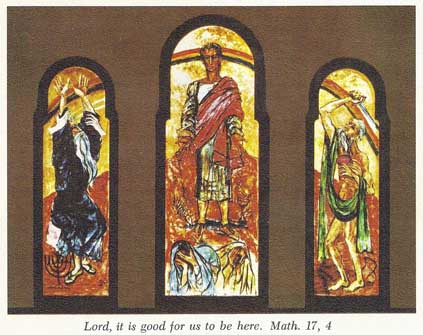
The most magnificent of her windows was in the alcove that would have been the area of the dining table originally and was for the Servites to the far right side of the main altar. A triptych of the Transfiguration of Jesus with Moses and Elijah in the side windows. When the non-Catholic Teen Challenge drug rehab program purchased the Priory, they removed most of the Servite additions in order to restore the Castle. They scraped the paint off the glass, at least on the side doors. When I first visited the Castle after the sale to Teen Challenge, sometime in the 70s, the Catholic stuff was all gone, but the Transfiguration windows had been preserved. In the mid-2000s, I was in Riverside to see my friend Tom Sheerin (who was dying from a brain infection he'd gotten from a dental surgery procedure). By that time, the Transfiguration windows too had been removed. This image doesn't come up on the internet anywhere but here. The image above is from a greeting card which the Servites had made. My friend, Allan Pinka, had sent it to me the summer he was starting novitiate at the Riverside Priory. Here are 3 images from an invitation to a Preview of the windows and exhibit of Abby Koffs' work, December 18, 1965, 1-4 pm. That's Abby with the brush. You can see the windows have lots of Greek text in them. All of these windows would have been as brilliant and colorful as the Transfiguration above. Abby Koffs was killed in an accident with an automobile while she was riding her bicycle. 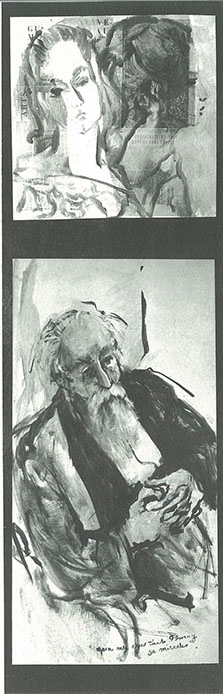 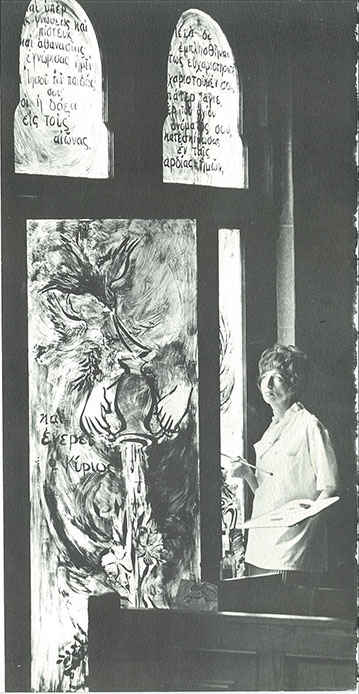 Fr David O. Brown was Novicemaster and Prior for ten years at the Servite Priory, though before these windows were painted. He died at age 97 on Jan 3, 2021. In 2015, Fr. David sent me this photograph of the Christmas Windows. You can see the brilliance of colors. 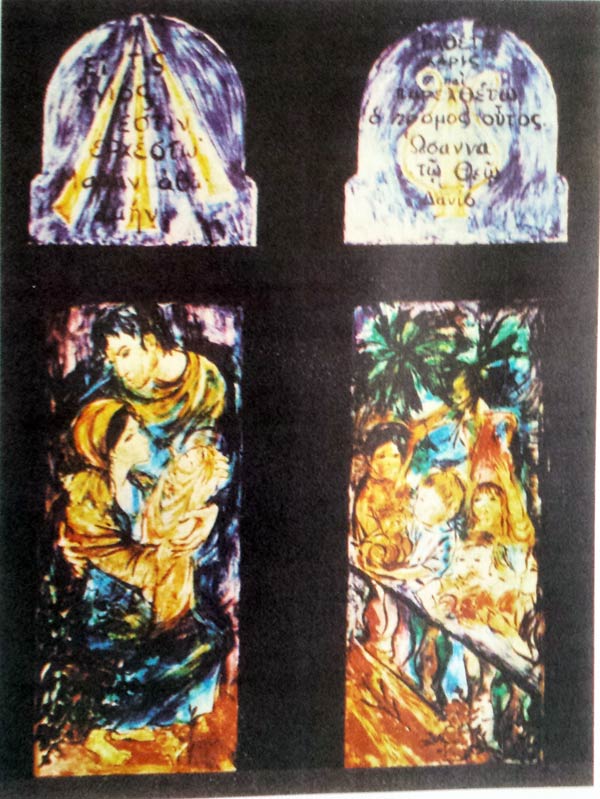 |
Toby Johnson, PhD is author of nine books: three non-fiction books that apply the wisdom of his teacher and "wise old man," Joseph Campbell to modern-day social and religious problems, four gay genre novels that dramatize spiritual issues at the heart of gay identity, and two books on gay men's spiritualities and the mystical experience of homosexuality and editor of a collection of "myths" of gay men's consciousness.
Johnson's book
GAY
SPIRITUALITY: The Role of Gay Identity in the Transformation of
Human Consciousness won a Lambda Literary Award in 2000.
His GAY
PERSPECTIVE: Things Our [Homo]sexuality Tells Us about the Nature
of God and the Universe was nominated for a Lammy in 2003. They
remain
in
print.








 Two
Spirits is available as an
audiobook narrated by Arthur Raymond.
Two
Spirits is available as an
audiobook narrated by Arthur Raymond. 
 It was no longer a
hideaway.
The sprawl of
Los
Angeles had reached all the way to the desert and surrounded the
property. And there was no need for hiding anymore. Indeed, the
seminary maintained a very visible presence in the middle-class
suburb of Riverside. We had a large crowd of followers and friends of
the community. And we conducted very popular and well-attended
liturgies on Sunday mornings. This was in 1969 when progressive
Catholics were spiritually exhilarated by folk guitars and still
expected that the Mass in the vernacular was going to make religion
more relevant in their lives. It was after one such liturgy, toward
the end of the first summer I lived there, that my life changed.
It was no longer a
hideaway.
The sprawl of
Los
Angeles had reached all the way to the desert and surrounded the
property. And there was no need for hiding anymore. Indeed, the
seminary maintained a very visible presence in the middle-class
suburb of Riverside. We had a large crowd of followers and friends of
the community. And we conducted very popular and well-attended
liturgies on Sunday mornings. This was in 1969 when progressive
Catholics were spiritually exhilarated by folk guitars and still
expected that the Mass in the vernacular was going to make religion
more relevant in their lives. It was after one such liturgy, toward
the end of the first summer I lived there, that my life changed. 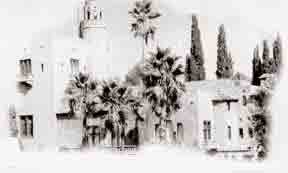
 I rolled the buffing machine out
into the
courtyard. It caught on a tile and the brush fell off. As I was
replacing it, the machine slipped and fell on my fingers. Then, when
I pushed open the door to the chapel, a pile of folding chairs that
had been carelessly leaned up against the door frame crashed down,
and the brush fell off the machine a second time. I stacked the
chairs properly, reassembled the machine, and managed to get it
through the door and down the aisle to the back closet where it was
kept. I found there was no room in the closet because folding chairs
there had also been stacked improperly and in order to get the
machine inside the door I had to position it precariously on the edge
of the brush. It slipped and fell on my fingers again.
I rolled the buffing machine out
into the
courtyard. It caught on a tile and the brush fell off. As I was
replacing it, the machine slipped and fell on my fingers. Then, when
I pushed open the door to the chapel, a pile of folding chairs that
had been carelessly leaned up against the door frame crashed down,
and the brush fell off the machine a second time. I stacked the
chairs properly, reassembled the machine, and managed to get it
through the door and down the aisle to the back closet where it was
kept. I found there was no room in the closet because folding chairs
there had also been stacked improperly and in order to get the
machine inside the door I had to position it precariously on the edge
of the brush. It slipped and fell on my fingers again.