|
Contact Us Table of Contents Search Site Google listing of all pages on this website Site Map Toby Johnson's Facebook page Toby Johnson's YouTube channel Toby Johnson on Wikipedia Toby Johnson Amazon Author Page  Secure site at https://tobyjohnson.com  Also on this website: As an Amazon Associate
I earn from qualifying purchases. Toby Johnson's books: Toby's books are available as ebooks from smashwords.com, the Apple iBookstore, etc. FINDING
YOUR OWN TRUE MYTH: What I Learned
from Joseph Campbell: The
Myth
of the
Great Secret
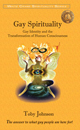
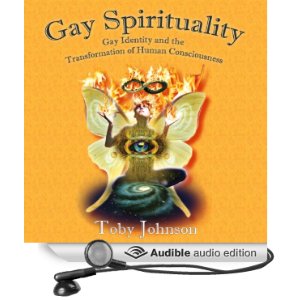
III GAY SPIRITUALITY: The Role of Gay Identity in the Transformation of Human Consciousness
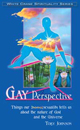
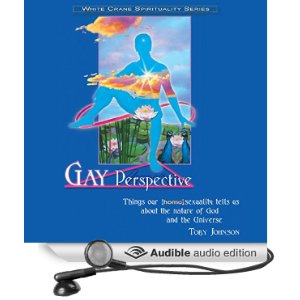
GAY PERSPECTIVE: Things Our Homosexuality Tells Us about the Nature of God and the Universe
SECRET MATTER, a sci-fi novel with wonderful "aliens" with an Afterword by Mark Jordan
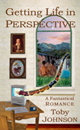
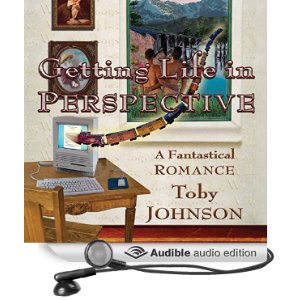
GETTING
LIFE IN PERSPECTIVE:
A
Fantastical Gay Romance set in two different time periods
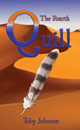
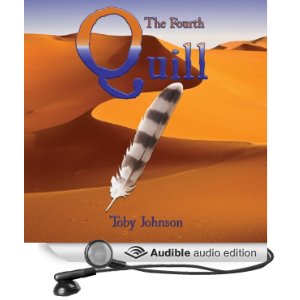
THE FOURTH QUILL, a novel about attitudinal healing and the problem of evil 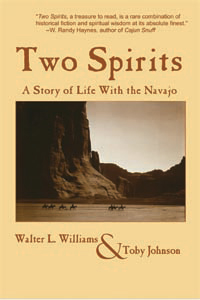 TWO SPIRITS: A Story of Life with the Navajo, a collaboration with Walter L. Williams  CHARMED LIVES: Spinning Straw into Gold: GaySpirit in Storytelling, a collaboration with Steve Berman and some 30 other writers
THE MYTH OF THE GREAT SECRET: An Appreciation of Joseph Campbell
IN SEARCH OF GOD IN THE SEXUAL UNDERWORLD: A Mystical Journey
Books on Gay Spirituality: White Crane Gay Spirituality Series
Articles and Excerpts:
Review of Samuel Avery's The Dimensional Structure of Consciousness Funny Coincidence: "Aliens Settle in San Francisco" About Liberty Books, the Lesbian/Gay Bookstore for Austin, 1986-1996 The Simple Answer to the Gay Marriage Debate A Bifurcation of Gay Spirituality Why gay people should NOT Marry The Scriptural Basis for Same Sex Marriage
Gay ConsciousnessQ&A about Jungian ideas in gay consciousness What Jesus said about Gay Rights Common Experiences Unique to Gay Men Is there a "uniquely gay perspective"? Interview on the Nature of Homosexuality What the Bible Says about Homosexuality Mesosexual Ideal for Straight Men Waves of Gay Liberation Activity Wouldn’t You Like to Be Uranian? The Reincarnation of Edward Carpenter Why Gay Spirituality: Spirituality as Artistic Medium Easton Mountain Retreat Center Andrew Harvey & Spiritual Activism The Mysticism of Andrew Harvey
Enlightenment
Joseph Campbell's description of Avalokiteshvara You're Not A WaveJoseph Campbell Talks about Aging What is Enlightenment? What is reincarnation? How many lifetimes in an ego? Emptiness & Religious Ideas Experiencing experiencing experiencing Going into the Light Meditations for a Funeral Meditation Practice The way to get to heaven Buddha's father was right What Anatman means Advice to Travelers to India & Nepal The Danda Nata & goddess Kalika Nate Berkus is a bodhisattva John Boswell was Immanuel Kant Cutting edge realization The Myth of the Wanderer Change: Source of Suffering & of Bliss World Navel What the Vows Really Mean Manifesting from the Subtle Realms The Three-layer Cake & the Multiverse The est Training and Personal Intention Effective Dreaming in Ursula LeGuin's The Lathe of Heaven Gay
Spirituality
|
I attended a funeral recently. It was a lovely and moving event. But I was disappointed in the focus of the service and content of the priest's talks. While there was certainly a linking made to the life of the person who had died, most of the priest's talk was about the Church and what the Church believes about death. He told stories about Jesus and the Apostles, even the minor disciple Cornelius, but he didn't talk abut the important things in the life and beliefs of the man we had all gathered to honor. |
Toby Johnson, PhD is author of nine books: three non-fiction books that apply the wisdom of his teacher and "wise old man," Joseph Campbell to modern-day social and religious problems, four gay genre novels that dramatize spiritual issues at the heart of gay identity, and two books on gay men's spiritualities and the mystical experience of homosexuality and editor of a collection of "myths" of gay men's consciousness.
Johnson's book
GAY
SPIRITUALITY: The Role of Gay Identity in the Transformation of
Human Consciousness won a Lambda Literary Award in 2000.
His GAY
PERSPECTIVE: Things Our [Homo]sexuality Tells Us about the Nature
of God and the Universe was nominated for a Lammy in 2003. They
remain
in
print.




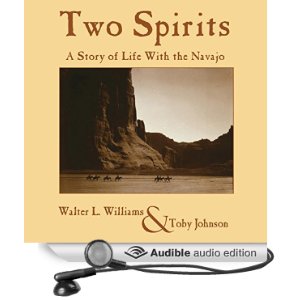 Two
Spirits is available as an
audiobook narrated by Arthur Raymond.
Two
Spirits is available as an
audiobook narrated by Arthur Raymond.